
- moderator10
- 0 Comments
What Are Tuberous Breasts and Why Do They Develop?
Tuberous breasts, also known as tubular breasts, describe a developmental breast shape that becomes apparent as the breasts grow during puberty. Rather than being caused by lifestyle habits or weight changes, the condition is associated with differences in how breast tissue and the surrounding skin develop.
The appearance can vary considerably between individuals. Common characteristics include a narrow breast base, constricted lower breast tissue, enlarged or prominent areolas, increased spacing between the breasts, and a more elongated or tubular contour. One breast may also be affected more noticeably than the other, resulting in visible asymmetry.
In a naturally rounded breast, tissue expands across the chest in multiple directions during development. With a tuberous breast, a restrictive tissue pattern may prevent the lower portion of the breast from expanding normally. Breast tissue can instead project forward toward the areola, contributing to the characteristic shape.
The degree of tuberous breast development ranges from mild to more pronounced. Some patients primarily notice limited lower-pole fullness or subtle asymmetry, while others may have significant constriction, breast volume differences, or noticeable areolar changes.
Because the condition involves more than breast size alone, tuberous breast correction requires individualized surgical planning. The objective is to address the underlying shape and tissue distribution while creating a softer, more balanced breast contour that complements the patient’s natural body proportions.
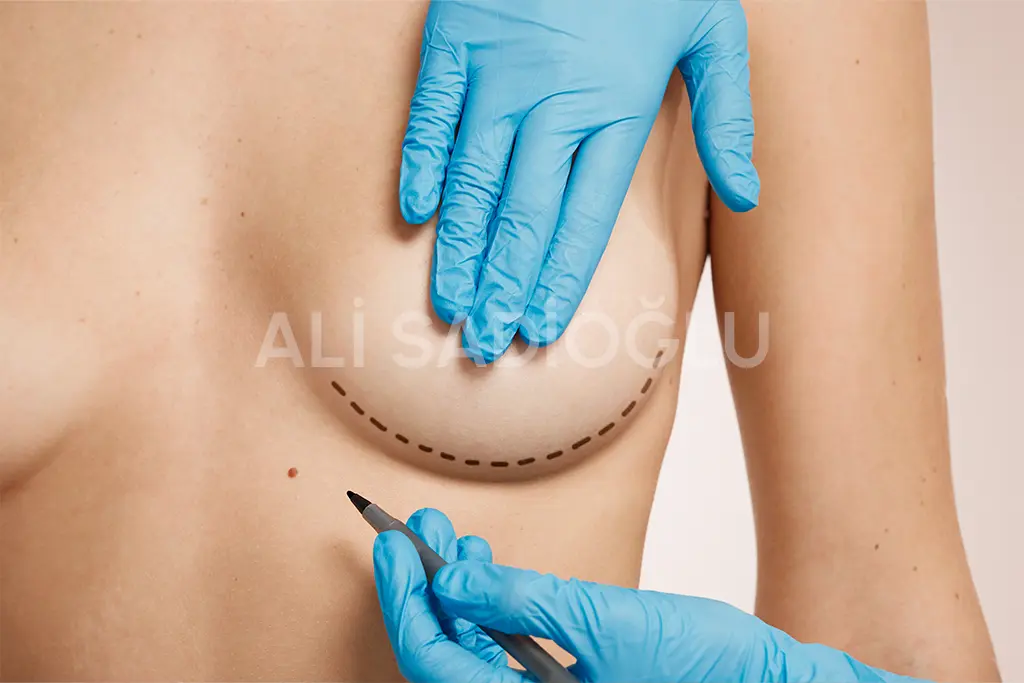
How Is Tuberous Breast Correction Performed?
Tuberous breast correction is planned according to the degree of constriction, breast volume, asymmetry, areolar appearance, and the patient’s desired outcome. Because the condition affects the distribution and shape of breast tissue, treatment usually involves more than simply increasing breast size.
A key part of surgery is addressing the constricted breast base. The restrictive tissue can be carefully released or redistributed so that the lower portion of the breast has greater freedom to expand into a more rounded contour. This helps improve the transition between the lower breast and the chest wall.
Depending on the patient’s anatomy, breast implants or fat transfer may be used to restore volume and improve symmetry. Implants can provide additional projection and help expand areas with limited development, while fat grafting may be used selectively to soften contours and correct localized volume differences.
When the areola is enlarged or breast tissue protrudes through the areolar region, areolar reshaping or reduction may also form part of the procedure. Patients with significant breast asymmetry may require different techniques on each side to achieve better balance.
In selected cases, a breast lift can be incorporated when skin laxity or nipple position also needs correction. The combination of techniques is determined individually rather than applying the same surgical approach to every patient.
The primary goal is to reshape and redistribute the existing breast tissue, correct constriction, and create a softer, more naturally rounded breast contour while maintaining proportions that complement the patient’s body.
Which Surgical Techniques Can Improve Breast Shape?
There is no single technique used for every tuberous breast correction. The surgical approach depends on the degree of breast constriction, existing volume, skin quality, areolar size, nipple position, and the amount of asymmetry between the breasts.
One of the most important steps is releasing the constricted breast tissue. Carefully modifying restrictive tissue can allow the lower portion of the breast to expand more naturally and create a broader, rounder breast base.
Breast implants may be considered when additional volume or projection is required. Implant size, shape, and position are selected according to the patient’s anatomy rather than simply choosing the largest possible volume. The aim is to support the newly created breast contour while maintaining balanced body proportions.
Fat transfer can also play a valuable role, particularly when smaller contour irregularities or volume differences need to be corrected. Fat obtained from another area of the patient’s body can be strategically placed to improve transitions and enhance symmetry.
For patients with enlarged or protruding areolas, areolar reduction and tissue reshaping may help create a more proportionate appearance. A breast lift may also be incorporated when nipple position or excess skin requires additional correction.
In Istanbul, Dr. Ali Sadioğlu evaluates the characteristics of each breast individually and develops a surgical plan based on the patient’s anatomy, degree of constriction, and aesthetic goals.
Combining appropriate techniques can help transform a narrow or tubular breast shape into a softer, more balanced, and naturally proportioned contour while addressing asymmetry when present.
Who Is a Good Candidate for Tuberous Breast Surgery?
Tuberous breast surgery may be suitable for individuals whose breast development has resulted in a constricted, elongated, asymmetrical, or noticeably narrow breast shape. The procedure is generally considered after breast development is complete and the breast contour has become stable.
Potential candidates may have characteristics such as a narrow breast base, limited fullness in the lower breast, enlarged or prominent areolas, significant spacing between the breasts, or differences in size and shape between the two sides. These features can occur individually or in combination and may vary considerably in severity.
Candidates should generally be in good overall health and have realistic expectations about what surgery can accomplish. The purpose of tuberous breast correction is to improve breast shape, proportion, and symmetry rather than guarantee perfectly identical breasts.
Future plans should also be considered before surgery. Pregnancy, breastfeeding, aging, and significant weight fluctuations may affect breast volume and shape over time. Patients should discuss these factors during consultation so that the treatment strategy can reflect both current anatomy and long-term expectations.
A detailed examination is essential because some breast characteristics that resemble tuberous breasts may have different underlying causes. Evaluating breast tissue distribution, skin quality, areolar dimensions, nipple position, chest-wall anatomy, and existing asymmetry helps determine the most appropriate surgical approach.
Careful patient selection and individualized planning are therefore central to achieving a more natural, balanced breast contour that remains proportionate to the patient’s body.
Recovery and Results After Tuberous Breast Correction
Recovery after tuberous breast correction depends on the techniques used during surgery. A procedure involving tissue reshaping alone may have a different recovery timeline from one that combines breast implants, fat transfer, areolar correction, or a breast lift.
During the early healing period, temporary swelling, bruising, tightness, and mild discomfort are common. A supportive surgical bra may be recommended to help protect the breasts, control swelling, and support the tissues as they adapt to their new contour.
Many patients can gradually return to light daily activities and non-strenuous work within the first few weeks, depending on the extent of surgery and their individual healing response. Heavy lifting, intense exercise, and activities that place excessive strain on the chest should be avoided until adequate healing has occurred.
The breast shape continues to evolve as swelling decreases and the tissues settle. Early results may appear higher, firmer, or slightly uneven, while the final contour becomes progressively softer and more natural over the following months. Incision lines also mature gradually and typically become less noticeable with time, although scar development varies between individuals.
Long-term results depend on factors such as skin quality, surgical technique, weight stability, pregnancy, aging, and hormonal changes. Natural changes to the breasts can still occur over time even after successful correction.
The objective of tuberous breast surgery is not to create perfectly identical breasts, but to correct constriction, improve tissue distribution, reduce noticeable asymmetry, and establish a rounder, more balanced, and naturally proportioned breast shape.